Decoding Period Pain: The Prostaglandin Connection
Understanding Prostaglandins and One Common Root of Menstrual Cramps
Period pain is one of the most normalized forms of suffering I see in women’s health.
So many women have been told, implicitly or directly, that cramps are just part of being a woman. That pain is expected. That discomfort is something to push through, override, suppress, or tolerate with medication and willpower.
But from a physiologic and embodied perspective, pain is never meaningless.
Pain is communication.
Menstrual pain, in particular, is your body giving you information about what’s happening beneath the surface. And one of the most common, and often misunderstood, contributors to period pain is prostaglandins.
Prostaglandins: Necessary, Powerful, and Sometimes Excessive
Prostaglandins are hormone-like signaling molecules involved in inflammation, blood flow, and smooth muscle contraction.
During menstruation, prostaglandins are released to help the uterus contract and shed the uterine lining. This process is normal. It’s essential. Without prostaglandins, menstruation wouldn’t happen.
The issue isn’t their presence.
It’s excess or imbalance.
When prostaglandin activity is too high, uterine contractions become stronger, more frequent, and more painful. Blood vessels constrict more intensely. Inflammation increases. Pain signals amplify.
This is one of the clearest examples of how a normal physiologic process can tip into unnecessary suffering when the terrain isn’t supportive.
What Prostaglandin-Driven Period Pain Often Feels Like
While every body is unique, prostaglandin-driven pain tends to have a recognizable pattern.
Women often describe:
Strong, gripping, wave-like cramps
Pain that peaks on day one or two of bleeding
Pain that eases once bleeding is fully established
Associated symptoms like nausea, loose stools, headaches, or fatigue
A sense of inflammatory “overdrive” rather than deep structural pain
This type of pain is not typically positional, and it’s not usually associated with pain during sex or between cycles. It’s acute, cyclical, and closely tied to the onset of bleeding.
That distinction matters.
Because not all period pain is the same, and not all pain should be approached the same way.
Why Prostaglandins Can Run High
Excess prostaglandin activity doesn’t happen in isolation. It’s usually the downstream expression of broader patterns in the body.
Some of the most common contributors include:
Systemic inflammation:
Low-grade, chronic inflammation from diet, stress, gut dysfunction, or environmental exposures can amplify prostaglandin production.
Estrogen–progesterone imbalance:
Higher estrogen relative to progesterone tends to increase prostaglandin synthesis. This is common in the luteal phase when progesterone is insufficient or poorly supported.
Fatty acid imbalance:
A higher intake of omega-6 fats relative to omega-3s shifts the body toward more inflammatory prostaglandins.
Blood sugar instability:
Blood sugar swings can quietly drive inflammation and hormonal signaling changes that worsen cramps.
Gut and liver burden:
The gut and liver play a central role in hormone metabolism and inflammatory regulation. When these systems are under strain, prostaglandin signaling often reflects it.
None of these mean something is “wrong” with you. They simply tell us where support is needed.
Why This Lens Changes Everything
When period pain is primarily prostaglandin-driven, approaches that only aim to “relax muscles” or override pain signals often fall short.
This is not a willpower issue.
And it’s not something you should have to endure.
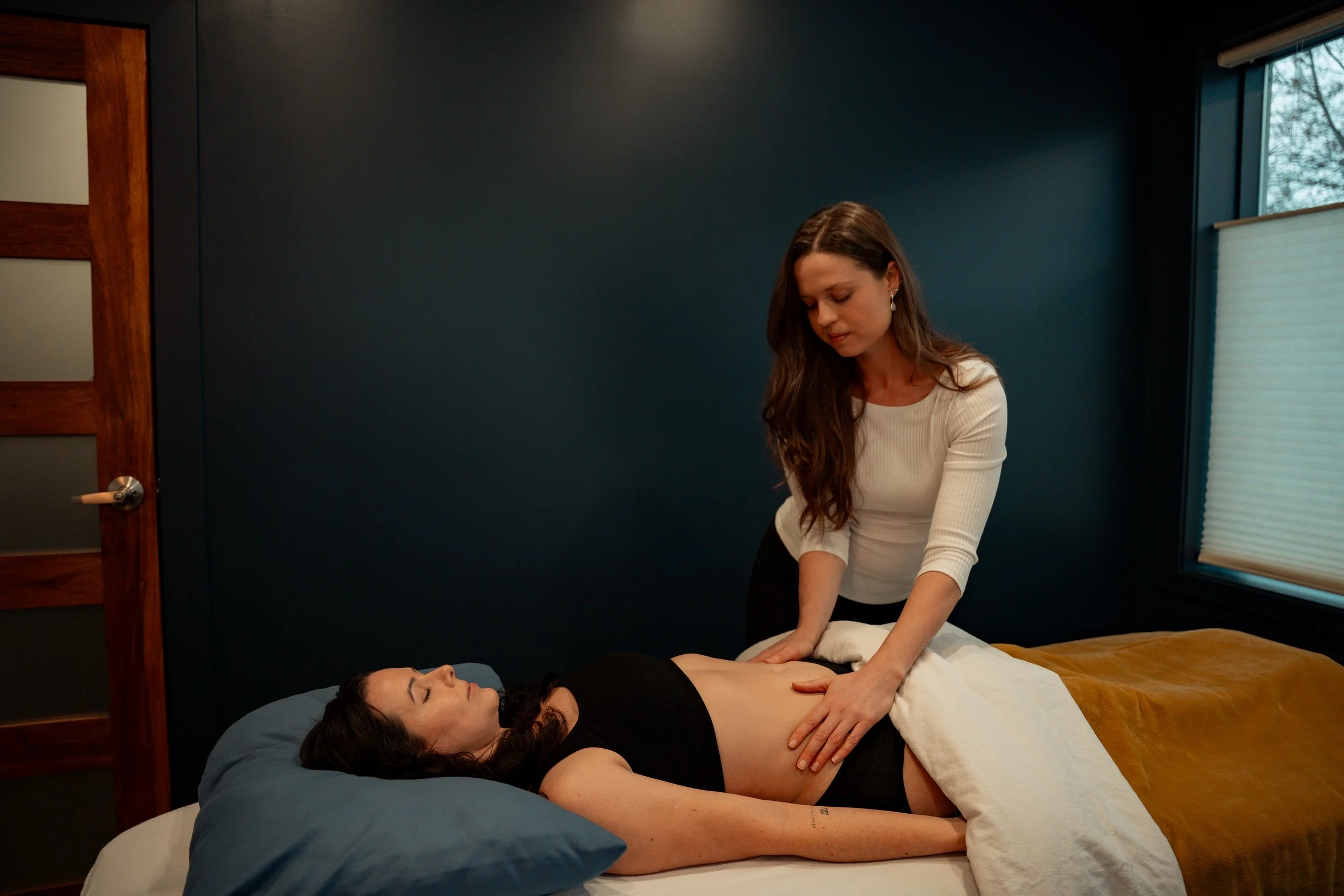
Support becomes far more effective when we work upstream. This may include targeted nutritional shifts, specific fats and minerals, herbal support, cycle-aware timing of key nutrients, pelvic massage and myofascial release, blood sugar control and reducing inflammatory load in ways that feel sustainable and respectful to the body.
When the environment changes, the signal changes.
Pain is information
Your cramps are not evidence of you doing something “wrong.”
They don’t necessarily mean your hormones are “out of balance.”
They are not a sign you’re weak or “bad at menstruating.”
They are not something to numb and ignore without curiosity.
They are information. Intelligent signals from your intelligent body.
And when we listen with precision rather than judgment, the body almost always responds.
This Is Part One of a Larger Conversation
Prostaglandins are only one possible contributor to period pain.
In future posts, I’ll be exploring other common patterns, including:
Pelvic floor tension and protective holding patterns
Endometriosis-pattern pain
Estrogen dominance and heavy, clotting cycles
Nervous system and trauma-held pelvic pain
Gut–hormone–inflammation feedback loops
Similar symptoms can be rooted in different physiology, and therefore require different care. There isn’t a one size fits all solution when it comes to treating women’s health. We are magical, complex beings that deserve full presence, attention, listening, respect and high quality care.
If this resonates, stay close, send me an email, or book a discovery call. And if you’re curious which pattern most closely matches your own experience, that’s a conversation I love having.