Decoding Period Pain: Pelvic Floor Tension and Protective Holding Patterns
In the last post, we explored prostaglandins and inflammatory cramps.
But not all period pain is inflammatory.
Some period pain is mechanical, some is muscular, some is protective. And this pattern is far more common than most women realize.
It is also important to understand that these patterns can coexist. You can have elevated prostaglandins and an overactive pelvic bowl at the same time. In fact, tension often amplifies inflammatory pain, and inflammation can increase muscular guarding. The body is layered, not binary.
What Is the Pelvic Floor, Really?
The “pelvic floor” is often described as a sling of muscles at the base of the pelvis that supports the bladder, uterus, and rectum.
That description is accurate, but incomplete.
I prefer the term pelvic bowl or pelvic diaphragm.
Because it is not flat like a floor. It is curved. Responsive. Three-dimensional.
It moves with your breath.
It responds to pressure.
It coordinates with your abdominal wall and your respiratory diaphragm.
It is dynamic.
Pelvic bowl tension, sometimes referred to clinically as a high tone (hypertonicity) or overactive pelvic floor, can significantly amplify menstrual pain. When this system is supple, it contracts and releases with rhythm. When it is chronically tense, it loses that rhythm. And when tension persists for long enough, weakness often follows.
This is why urinary incontinence can coexist with pelvic tension. After chronic gripping and over-recruitment, the muscles fatigue and lose functional coordination. What appears to be weakness may actually begin as protective bracing.
Your Pelvic Bowl Is a Living, Responsive System
Your pelvic bowl does not just hold organs in place.
It contracts.
It releases.
It contains.
It responds to every breath, day-to-day posture, childbirth, injury, surgery, constipation, athletic overtraining, stress, relational history, and perceived threat.
Many women are walking around with pelvic bowls that never fully soften, that stay contracted. Then their period arrives, and you add uterine contractions to an already guarded muscular space… Pain makes sense as a result.
What Pelvic Tension Driven Period Pain Often Feels Like
This pattern has a different flavour than purely prostaglandin-driven pain.
Women often describe:
Deep, aching pain in the pelvis or sacrum
Pulling or stabbing sensations
Pain that feels positional or worsens with sitting
Pain with tampon insertion or intercourse
Persistent pelvic discomfort outside of menstruation
Urinary leakage alongside a feeling of tightness or gripping
Pain may not peak only on day one, it may linger.
It may feel like your pelvis is always bracing, glutes clenching, holding tight.
Why Would the Pelvic Bowl Be Tight?
The pelvic bowl tightens for reasons.
Sometimes it is biomechanical:
Tailbone injury
Birth trauma
Abdominal or pelvic surgery
Chronic constipation
High-intensity athletic training
Sometimes it is nervous system driven:
Chronic stress
Hypervigilance
A body that never feels safe enough to soften
Sometimes it is relational or emotional:
Painful sex history
Boundary violations
Protective holding without conscious awareness
None of this means something is wrong with you.
The body protects before you consciously decide to.
Why This Changes Treatment
If your pain is primarily muscular and protective, anti-inflammatories alone will not resolve it.
You can balance hormones beautifully and still experience pain if the pelvic bowl never learns to release.
This is where pelvic therapy, breathwork, myofascial release, and nervous system regulation become powerful medicine.
Your uterus contracts every month to release your bleed.
Your pelvic bowl needs to know how to yield, not fight against it.
Hands-On, Integrative Pelvic Bowl Care
This is the work I am deeply devoted to.
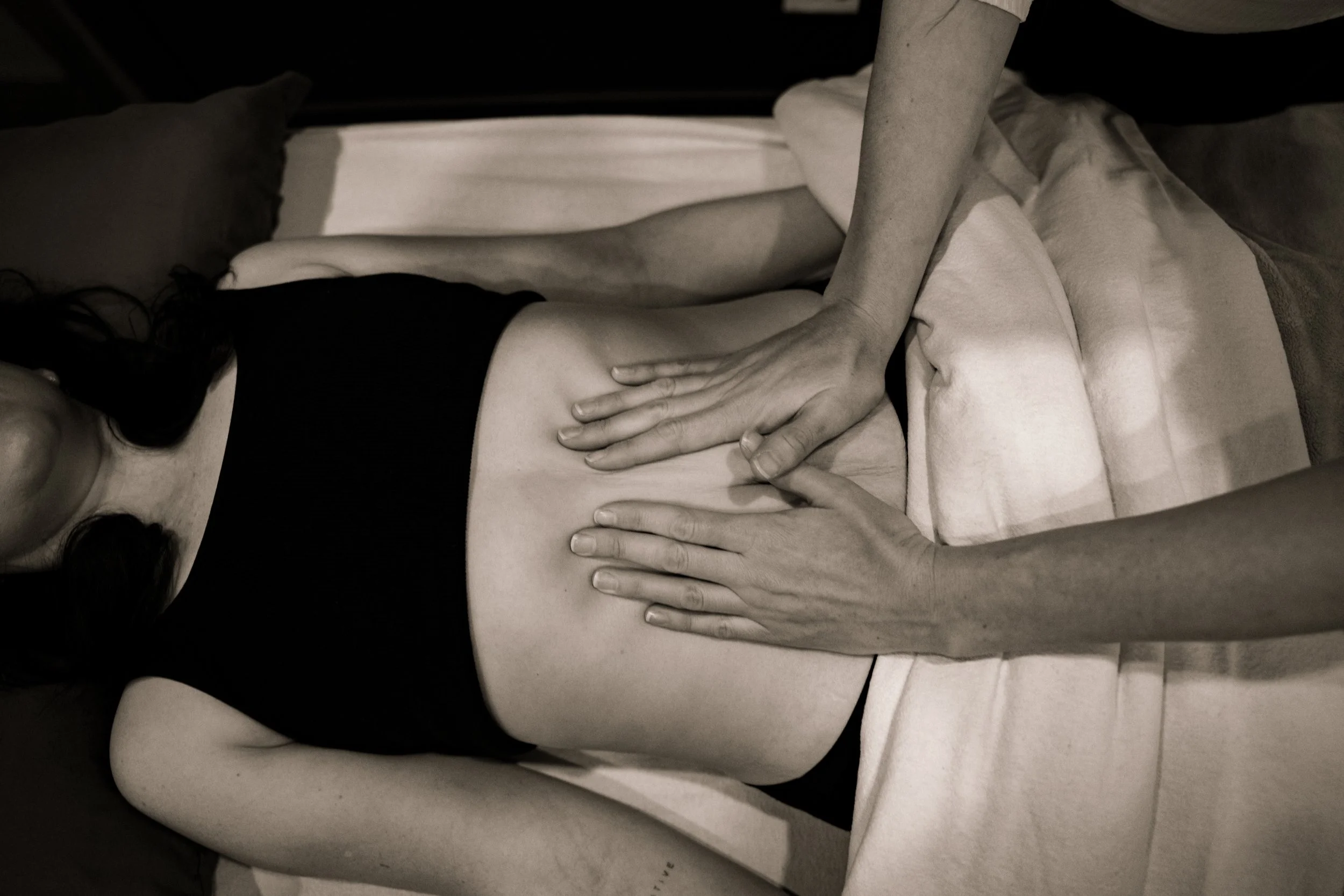
In my clinical practice, I offer abdominal massage and hands-on, hands-in pelvic bowl care to assess and gently release tension patterns that are often missed in conventional settings.
We work with breath.
With tissue.
With nervous system regulation.
With structure and function together.
To my knowledge, I am currently the only naturopathic doctor in the Okanagan offering hands-on, hands-in pelvic bowl care within naturopathic scope. My approach offers the foundation of naturopathic medicine and combines it with this hands-on work to serve you fully, all within one appointment.
This work is precise. Respectful. Rooted in anatomy and physiology.
And it changes lives.
This Is Part Two of a Larger Conversation
Prostaglandins were Part 1.
Pelvic bowl tension is Part 2.
Period pain has layers.
And when we identify the right layer, care becomes far more precise.
If this resonates, book a discovery call if you are ready to understand your pattern more deeply.
Your pelvis deserves full attention. Not assumptions.